TL;DR
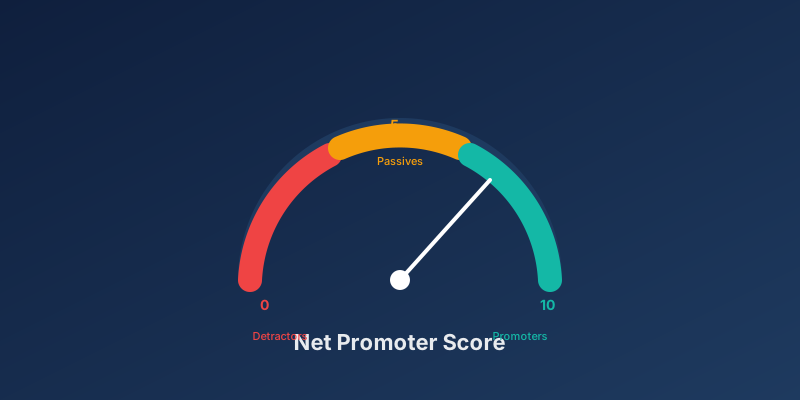
- Use KPMG's Six Pillars to understand what drives NPS and loyalty in your sector
- Additionally, measure your performance across the six dimensions - not just NPS as a standalone number
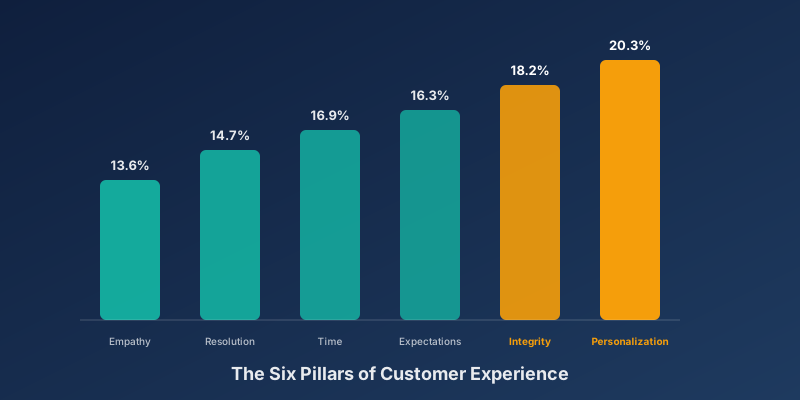
- Prioritize Integrity and Personalization: together they drive approximately 39% of loyalty
- Automate the administrative and invest freed-up time in strategic action
Contents9 sections
Introduction: Why KPMG CEE Data Is Relevant for You
KPMG's Global Customer Experience Excellence report isn't just an academic exercise. In fact, it's the most comprehensive data-driven answer to the question: What drives customer loyalty and NPS?
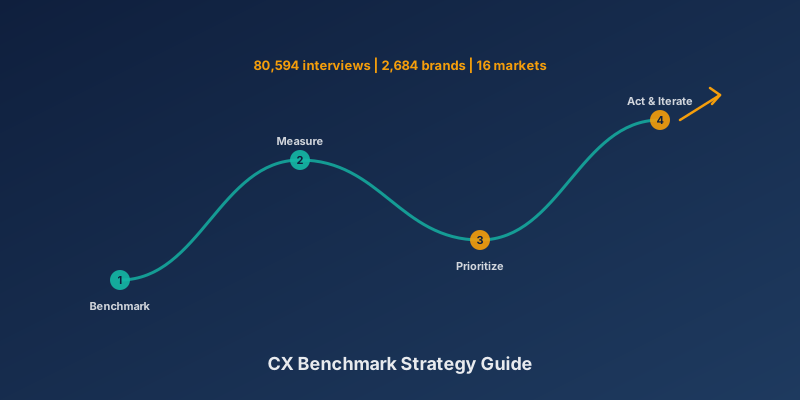
With 80,594 interviews, 2,684 brands, and 16 countries, it gives you:
- Benchmark data for your sector
- Prioritization basis for which CX dimensions to invest in
- Documentation to convince leadership of the value of CX investment
- Best practices from the world's best customer experiences
This guide gives you a practical, 6-step approach to turning KPMG's data into action.
Step 1: Know Your Sector's Benchmark
First, start by understanding where your sector stands in the global CX landscape:
| Sector | CEE Score | YoY Change |
|---|---|---|
| Healthcare | 7.90 | - |
| Non-Grocery Retail | 7.65 | - |
| Grocery Retail | 7.54 | - |
| Banking | 7.52 | +0.7% |
| Insurance | 7.48 | - |
| Restaurants/Fast Food | 7.46 | - |
| Travel & Hotels | 7.42 | - |
| Automotive | 7.37 | - |
| Telecommunications | 7.28 | - |
| Logistics | 7.07 | - |
| Utilities | 7.02 | - |
| Public Sector | 6.68 | - |
Step 2: Understand What Drives Value in Your Context
The six pillars drive NPS and loyalty to different degrees:
| Pillar | NPS Driver | Loyalty Driver |
|---|---|---|
| Integrity | 19.0% | 18.2% |
| Personalization | 18.7% | 20.3% |
| Expectations | 16.9% | 16.3% |
| Time & Effort | 15.2% | 16.9% |
| Resolution | 15.2% | 14.7% |
| Empathy | 15.0% | 13.6% |
- For NPS: Focus on Integrity and Personalization
- For loyalty: Focus on Personalization and Integrity (in reverse order)
- For both: Both pillars are critical regardless
Step 3: Measure Your Performance Across the Six Pillars
NPS alone tells you how satisfied customers are, but not why. Therefore, to take action, you need to know which pillars are strongest and weakest.
How to Measure the Pillars
Add questions to your NPS survey covering each pillar:
Step 4: Identify Your Gaps and Prioritize Efforts
Once you have data, you can consequently identify:
- Strongest pillars: Where you already perform well - maintain and reinforce
- Weakest pillars: Where there's the greatest potential for improvement
- Highest-weight pillars with lowest scores: The combined analysis that gives the best prioritization
Prioritization Matrix
Plot your pillar scores against their relative weight:
- High weight + low score = Top priority (greatest potential impact)
- High weight + high score = Maintain and reinforce
- Low weight + low score = Secondary priority
- Low weight + high score = Hygiene factor - maintain
Step 5: Design Actions That Address the Pillars
For each prioritized pillar, then design concrete actions:
Integrity Actions
- Review pricing and terms for clarity
- Implement proactive communication about changes
- Ensure consistent delivery across channels
Personalization Actions
- Integrate CRM data with feedback for a unified customer view
- Implement AI-powered analysis of open-ended responses
- Design personalized follow-up flows based on customer segment
Time & Effort Actions
- Automate feedback collection and distribution
- Reduce the number of clicks and touchpoints in customer interactions
- Implement self-service that actually works
Resolution Actions
- Design Close the Loop processes for all detractors
- Set SLAs for follow-up on negative feedback
- Train teams in service recovery best practices
Empathy Actions
- Train customer-facing teams in empathy and active listening
- Implement sentiment analysis that captures emotional nuances
- Give frontline employees autonomy to act in the customer's interest
Step 6: Measure, Report, and Iterate
CX is not a project - instead, it's an ongoing discipline. Establish:
Cadence
- Monthly: Dashboard review of NPS and pillar scores
- Quarterly: In-depth analysis of trends and improvements
- Bi-annually/Annually: Strategic evaluation and benchmark against KPMG CEE data
KPIs
- NPS development (overall and per pillar)
- Close the Loop rate (% of detractors contacted)
- Response rate (engagement with the feedback process)
- Business KPIs (churn rate, customer lifetime value, upsell/cross-sell)
Reporting
Connect CX data with business outcomes. Moreover, KPMG's data shows that organizations investing in trust, personalization, and integration outperform competitors. Use this to document ROI.
Summary: 6 Steps to KPMG-Informed CX
- Know your benchmark - Where does your sector stand?
- Understand the drivers - What drives NPS and loyalty in your context?
- Measure the pillars - Add pillar questions to your feedback
- Prioritize gaps - Focus on high-weight + low-score pillars
- Design actions - Concrete initiatives per pillar
- Measure and iterate - Continuous improvement, not a one-off project
How SurveyGauge Helps
In particular, SurveyGauge's model of Platform + Administration + Advisory covers the entire process:
- Platform: Measure NPS and the pillars with flexible surveys, AI analysis, and real-time dashboards
- Administration: We handle distribution, follow-up, and data quality, so you focus on action
- Advisory: Our CX experts help with gap analysis, prioritization, and action plans based on KPMG data and your specific context
Source: KPMG Global Customer Experience Excellence 2025-2026
Frequently asked questions
What is the KPMG CEE report?
KPMG's Customer Experience Excellence (CEE) report is the world's largest CX benchmark. Specifically, the 2025-2026 edition is based on 80,594 interviews across 2,684 brands in 16 countries. It identifies six pillars that drive customer experience and ranks sectors and brands.
How can I use KPMG data in practice?
Start by identifying your sector's benchmark. Then measure your performance across the six pillars through customer feedback. From there, identify the pillars with the greatest improvement potential. Finally, prioritize efforts based on what drives the most value in your specific context.
Are KPMG's Six Pillars relevant for B2B?
Yes. While the CEE study is primarily based on consumer interviews, the six pillars are universal drivers of customer experience. Indeed, in B2B, Integrity and Personalization are typically even more important than in B2C. This is because relationships are long-term and contract values are high.

Written by
SurveyGauge Team
The advisors and developers behind SurveyGauge. We run customer satisfaction programmes for B2B companies, from 20 key accounts to global banks.