"We are very satisfied with our collaboration with SurveyGauge. They made it possible for us to get started with customer satisfaction measurements far faster than we could have on our own."
Camilla Virklund, Marketing Manager, MedicSport
Who is FH Group?
FH Group supplies, installs and services professional fitness and training equipment for fitness centres, physiotherapy clinics, sports halls, companies and public institutions. The business runs through three brands - MedicSport, Proterapi and LivingSport - with around 1,300 B2B customers and four webshops.
But the strategic heart of the business is neither the webshop sales nor the individual projects. It is the roughly 200 service agreements where the recurring revenue lives. A fitness centre that buys equipment is a good order. A fitness centre on a service agreement is a relationship that pays off year after year - and recommends you to the next centre.
The challenge: three brands, one question nobody could answer
What do the customers actually think - across the entire business? FH Group had never been able to answer that question with data. Each brand had its own customer base, its own systems and its own sense of how things were going. There was no unified measurement and therefore no comparable picture.
At the same time, the service business is deeply relational. The project ends when the equipment is installed - but the service agreement has to be renewed and retained year after year. A customer who experiences slow follow-up or unclarity about what the agreement actually covers rarely says so directly. It only shows the day the agreement is cancelled.
What we built together
One strategic baseline across three business units. The same questionnaire, the same scale and the same categories for all three brands: loyalty (NPS), satisfaction and importance per business area. That made the results comparable - leadership can see where the individual brands differ, and what repeats across the board.
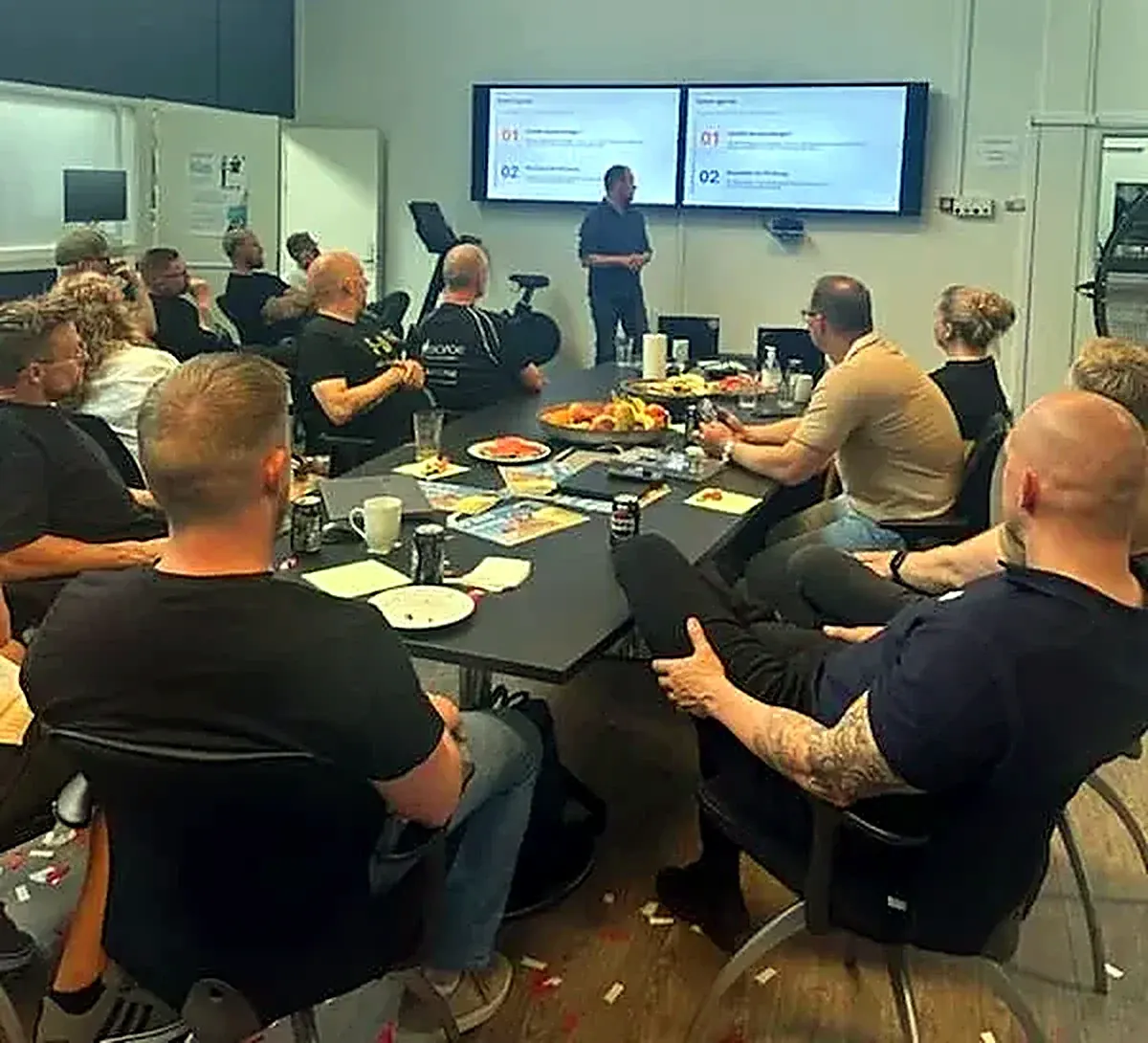
Reporting that lands in two places. A strategic report for leadership with prioritised focus areas - and an employee presentation, so the results were anchored with the people who meet the customers every day. A measurement only leadership sees changes nothing.

Detractor follow-up from day one. Every single detractor was identified by name, brand and cause - and followed up personally while there is still time to act. In a business with 200 key relationships, one saved service agreement justifies the measurement on its own.
A prioritised action plan. Not a report for the drawer, but a roadmap: quick wins in the first 90 days and strategic initiatives on a 6-12 month horizon, with ownership placed in the organisation.
Results
- NPS +37 as the baseline - a solid B2B level and a clear reference point for the measurements to come
- One comparable picture across MedicSport, Proterapi and LivingSport - for the first time in the company's history
- Two prioritised focus areas - clearer communication of the value in the service agreements and even faster follow-up on service cases - identified across all three brands
- Personal follow-up on every detractor - from anonymous number to concrete action, before small irritations become cancellations

What FH Group says about the collaboration
"Throughout the process we have received professional guidance and expert input - from designing the questionnaire to implementation and follow-up. SurveyGauge follows best practice in customer satisfaction and NPS analysis and made sure the right process was in place from the start.
The collaboration is highly efficient, as SurveyGauge handles the practical work while we contribute input for the questions and decide which customer segments to measure. The results are presented in a user-friendly online dashboard that gives a clear overview of both overall customer satisfaction and trends at segment level.
Our very first NPS measurement already gave us valuable insights that led to concrete initiatives to improve the customer experience. The collaboration has been an important catalyst for a broader effort around customer service and customer experience in our company.
SurveyGauge is a highly specialised partner with deep expertise, and I warmly recommend them to companies that want a professional, data-driven foundation for their customer satisfaction work."
Camilla Virklund, Marketing Manager, MedicSport
Next steps
The baseline is the foundation - not the end goal. The next phase is already planned: transactional measurements on parts, installation and service cases, governed by cooldown rules so no customer is ever over-surveyed. And an automated integration to FH Group's Salesforce and Dynamics, so measurements are triggered by real events in the business instead of manual lists.
After that, the relational NPS is re-measured every six months against the baseline, so the effect of the initiatives can be documented in black and white.
What we learned
Many multi-brand companies wait for the perfect data infrastructure before they start measuring. FH Group did the opposite: baseline first, automation afterwards. That gave leadership a basis for decisions in weeks instead of quarters - and a programme already delivering value before the integration is even built.
Key Points:
- Three business units measured with the same methodology - the first unified CX picture in the company's history
- NPS +37 as the strategic baseline
- Around 200 service agreements at the centre of the retention work
- Detractor follow-up and a prioritised action plan from day one
- Transactional measurements and automated system integration as the next phase
Questions about the case
Why start with a baseline instead of waiting for full system integration?
Because the value lies in getting started. A strategic baseline requires no integration - it requires a well-designed questionnaire and the right recipients. FH Group got a reference point, identified detractors and prioritised focus areas within weeks. The automation towards Salesforce and Dynamics is built afterwards, on top of a programme that already works.
How do you measure across multiple brands with different systems?
With one common methodological framework: the same scale, the same question structure and the same categories across brands, segmented per brand and customer type. That makes the results comparable - you can see where one brand outperforms the others, and where a pattern repeats across the entire business. System integration can come later; comparability has to be designed in from the start.